Thursday, November 19, 2026, 11:00 am at CEMES, coffee served by 10:30 am
conference room + remote
by Christian Joachim, DR emeritus at GNS group, CEMES, Toulouse
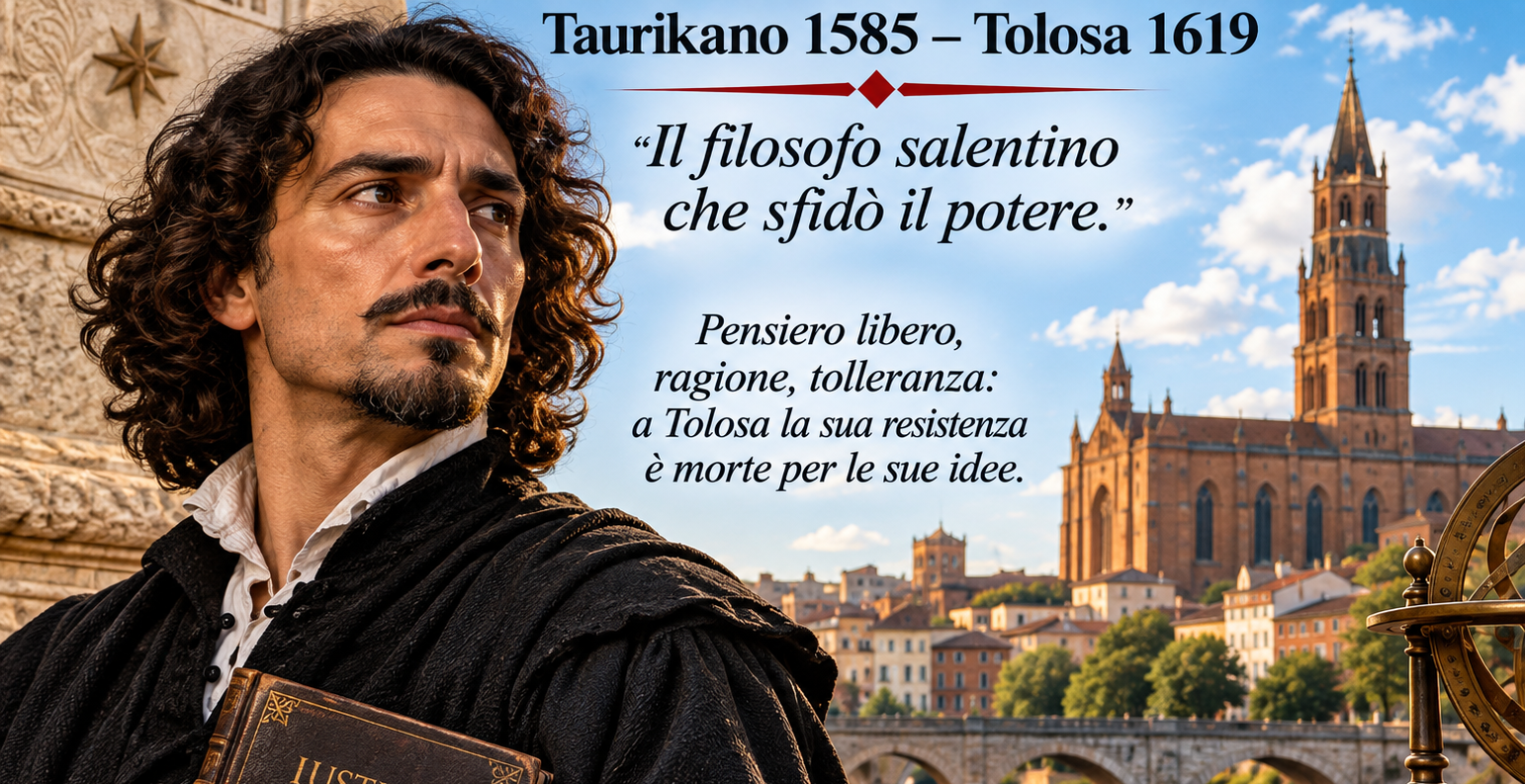
Using new digital research tools (as well as traditional methods), we have reopened the case of Vanini [1], who was tortured and burnt at the Place du Salin in Toulouse on 9 February 1619. For over 400 years, numerous authors and researchers have sought to understand why, in Toulouse towards the end of 1618, such relentless persecution was directed at this Italian – a contemporary of G. Galileo and the ‘successor’ in Toulouse to G. Bruno [2]. C. Vanini was, as chance would have it, It was a coincidence of religious and political events, coupled with local rivalries, that led him to the stake [3,4]. His philosophical (and scientific) influence has now been forgotten. In the early 17th century, the limited mathematics he taught and his rejection of the immortality of the soul coincided with a pivotal moment in the history of chemistry. In Toulouse, this marked the end of pastel. Dyers and a few apothecaries were experimenting with indigo (the ‘devil’s dye’). People were beginning to move away from alchemy with Jean Rey’s treatise, printed in 1623, which introduced the thermometer. C. Vanini wrote at the time, ‘holy water heals because it is cold’.
References:
[1]: Cesare Vanini : un « cold case » au début du XVIIe siecle ? Première partie : « Loger » Pomponio Usciglio. C. Joachim, C. de Lacvivier, S. Ponsonnaille, Mémoires de l’Académie des Sciences, Inscriptions et Belles Lettres de Toulouse, Sous presse (2026). CNRS: hal-05127478
[2]: D. Foucault, Un philosophe libertin dans l’Europe baroque : G. Cesare Vanini (1585-1619), Paris, Classique Garnier, 2023.
[3]: M.C. Vignal-Souleyreau, le Masuyer (Gilles) , dans Correspondance et papiers d’État du cardinal de Richelieu. https://richelieuletters.hypotheses.org/46370
[4]: Cesare Vanini : un « cold case » au début du XVIIe siecle ? Deuxième partie : « François de Clary et Gilles le Masuyer ». C. Joachim, M.C. Vignal-Souleyreau, C. de Lacvivier, S. Ponsonnaille, Mémoires de l’Académie des Sciences, Inscriptions et Belles Lettres de Toulouse, Sous presse (2026). CNRS: hal- 05368954